
Blunderbore
Giant of Cornish and English folklore, slain by Jack.

Wikipedia / Wikimedia Commons
Blunderbore (also recorded as Blunderboar, Thunderbore, Blunderbus, or Blunderbuss) is a giant of Cornish and English folklore. He appears in a number of folk and fairy tales, most notably 'Jack the Giant Killer', and is frequently associated with the area of Penwith. The name is often appropriated by other legendary giants in later stories.
- field
- Folklore
- nationality
- Cornish and English
- known_for
- Giant in 'Jack the Giant Killer' and other tales; associated with Penwith
Lore & Background
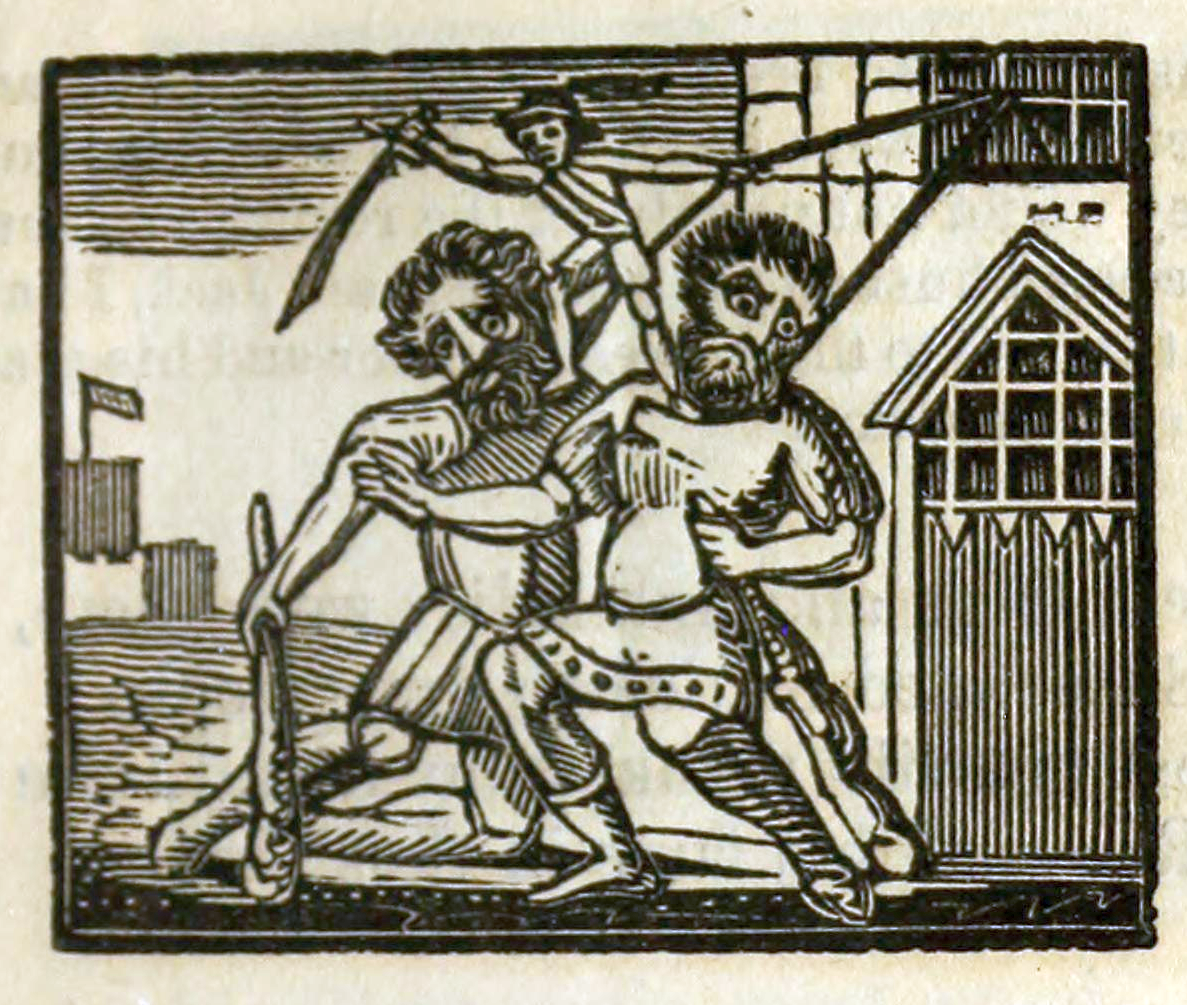
Cornish folklore remembers Blunderbore as living in Ludgvan Lese, a manor in Ludgvan, where he terrorized travelers heading north to St Ives. In 'Jack the Giant Killer', he is the second or third giant killed by the hero Jack, along with his brother Rebecks. In the version recorded by Joseph Jacobs, Blunderbore lives in Penwith, kidnaps three lords and ladies, and plans to eat the men and make the women his wives. When the women refuse to eat their husbands, he hangs them by their hair in his dungeon. Jack, recognized by his labeled belt, is carried to the castle and locked in a cell. Jack creates nooses from rope, and when Blunderbore and Rebecks arrive, Jack drops the nooses, slides down, and slits their throats.
A giant named Blunderbore also appears in the Cornish fairy tale 'Tom the Tinkeard', a local variant of 'Tom Hickathrift'. In this version, Blunderbore builds a hedge over the King's Highway between St Ives and Marazion, claiming the land. He has kidnapped at least twenty women as his wives. The hero Tom awakens the giant from a nap while taking a wagon and oxen back from St Ives to Marazion. Blunderbore tears up an elm to swat Tom, but Tom slides an axle from the wagon and uses it to fatally wound the giant. In his dying breaths, the giant confers all his wealth to Tom and requests a proper burial.
Reader's Guide
Blunderbore is significant as a recurring giant figure in Cornish and English folklore, primarily through his role in 'Jack the Giant Killer', which helped popularize the name and associate it with other legendary giants. The name is frequently appropriated by other giants in later tales, such as 'Tom the Tinkeard' and 'Jack and the Beanstalk', where it is usually given as the name of the ogre. This cross-tale usage demonstrates the enduring archetype of the giant in folklore and the influence of 'Jack the Giant Killer' on subsequent storytelling. Blunderbore's legacy extends to modern popular culture, appearing as a monster type in the computer game Diablo II. His stories often involve themes of abduction, land disputes, and the hero's cleverness overcoming brute strength, reflecting common motifs in British folklore.
Did You Know?
- Blunderbore is also recorded as Blunderboar, Thunderbore, Blunderbus, or Blunderbuss.
- In 'Jack the Giant Killer', Blunderbore is the second or third giant killed by Jack, along with his brother Rebecks.
- In the Cornish tale 'Tom the Tinkeard', Blunderbore built a hedge over the King's Highway between St Ives and Marazion.
- Blunderbore appears as a monster type in the computer game Diablo II.
Identity and Cornish Roots
Blunderbore stands as one of the most recognizable giants in the folk traditions of Cornwall and England, a figure whose very name has shifted and multiplied across generations of oral storytelling. Known by a constellation of variant spellings—Blunderboar, Thunderbore, Blunderbus, and Blunderbuss—the giant's identity is as fluid as the tales that carry him. His home territory is firmly rooted in the Penwith peninsula, the rugged western tip of Cornwall, where local memory places him at the manor of Ludgvan Lese, from which he is said to have preyed on anyone making the journey north toward St Ives. The image is vivid: a monstrous landlord holed up in a single estate, guarding a stretch of highway and treating every passing traveler as a potential meal. His presence across so many distinct narratives, from heroic ballads to domestic fairy tales, marks him not as a single fixed character but as a recurring archetype of the territorial, violent giant that British folklore has long used to embody the dangers of the road and the untamed power of the land itself.
The Slaying in Jack the Giant Killer
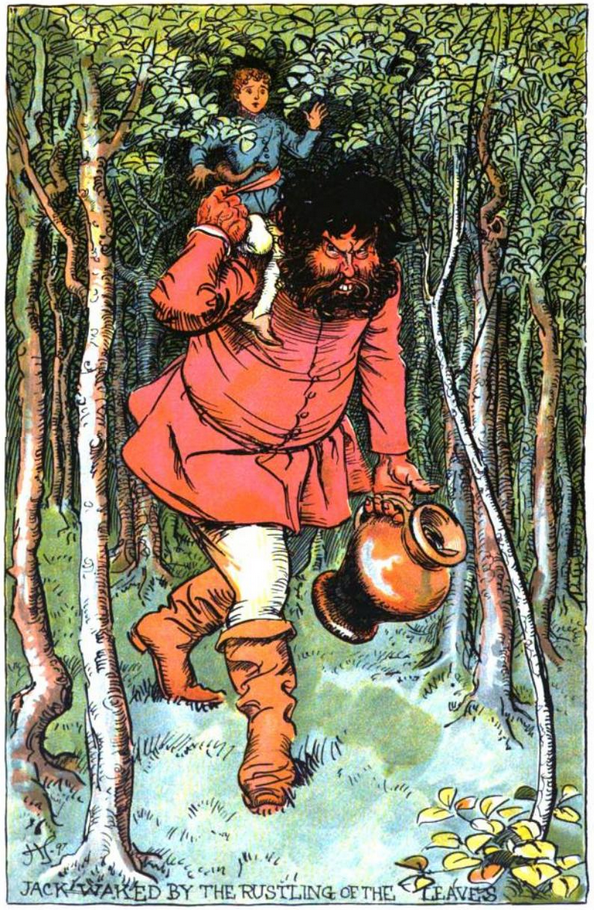
In the most celebrated of his stories, the fairy tale Jack the Giant Killer, Blunderbore serves as the second or third of the giants felled by the young hero Jack, fighting alongside his brother Rebecks. The version recorded by Joseph Jacobs paints a grim picture: Blunderbore, dwelling in Penwith, has abducted three lords and three ladies, intending to devour the men and force the women into marriage. When the captive women refuse to sit at his table and eat their husbands' flesh, he drags them by their hair into a dungeon and abandons them to die of starvation. The turning point arrives when Jack, traveling the highway from Penwith toward Wales, pauses at a fountain to drink and dozes off. Blunderbore stumbles upon the sleeping boy, recognizes him by the belt that identifies him, and recalls the hero's earlier killing of the giant Cormoran. He hauls Jack into his castle and seals him in a cell, then departs to fetch Rebecks. In that brief window, Jack fashions nooses from rope, drops them over the edge, slides down, and cuts both giants' throats.
The Name Spreads: Tom the Tinkeard and Beyond
The influence of Jack the Giant Killer proved so powerful that the name Blunderbore became almost a generic label for any fearsome giant in subsequent British tales. In Tom the Tinkeard, a distinctly Cornish retelling of the broader Tom Hickathrift tradition, a giant by that name has erected a hedge across the King's Highway running between St Ives and Marazion, declaring the entire stretch his personal property. His cruelty is even more extreme than in the Jack narrative: he has seized at least twenty women to serve as his wives. The hero Tom, returning from St Ives to Marazion with a wagon and a team of oxen, accidentally rouses the giant from his nap. Blunderbore rips an elm tree from the ground to use as a club, but Tom wields a wagon axle as his weapon and drives it into the giant, delivering a fatal wound. In his final moments, the dying Blunderbore transfers all his accumulated wealth to Tom and asks only for a decent burial. The name also commonly appears as the ogre in Jack and the Beanstalk, further cementing its association with the archetypal monstrous antagonist.
Enduring Echoes and Modern Resonance
Blunderbore's footprint in popular imagination extends well beyond the pages of collected fairy tales. The sheer variety of his name—Blunderboar, Thunderbore, Blunderbus, Blunderbuss—testifies to a long, unbroken chain of oral transmission in which each teller reshaped the giant to suit local geography and audience. His stories span a wide swath of the British landscape, from the Penwith headland and the Ludgvan manor to the highway stretching toward Wales, and from the St Ives-to-Marazion road to the unnamed castle where Jack meets his end. This geographic spread suggests that Blunderbore was never merely a single local legend but a flexible narrative vessel, absorbing the fears and heroics of different communities. In the modern era, his name has crossed into digital entertainment, appearing as a monster type in the computer game Diablo II, a reminder that the archetypal giant who hoards wealth, kidnaps travelers, and guards a stretch of road remains a compelling figure for new generations of storytellers and game designers.
Gallery
Frequently Asked Questions
Who is Blunderbore?
Blunderbore is a legendary giant from Cornish and English folklore, best known as the primary antagonist in the classic tale 'Jack the Giant Killer.' He is most closely tied to the Penwith peninsula in Cornwall.
What role does Blunderbore play in folklore?
He serves as the towering, threatening giant that the hero Jack must outwit and defeat, functioning as the story's central obstacle. His name has since been borrowed and reused by other giant figures in later folk narratives.
How does Blunderbore's story end?
In the traditional telling, Jack ultimately slays the giant, completing his quest and earning the title 'Jack the Giant Killer.' This death cements him as the defeated foe rather than a surviving character.
What other names is Blunderbore recorded under?
The giant appears in various spellings across manuscripts and oral traditions, including Blunderboar, Thunderbore, Blunderbus, and Blunderbuss. These variants reflect regional pronunciation differences and scribal inconsistencies rather than distinct characters.
Why is Blunderbore significant in British folklore?
He anchors one of the most widely retold Cornish hero tales and gives the Penwith region its most recognizable mythological figure. His name has become a near-generic label for giant antagonists in later English and Cornish storytelling.
More in British folklore 1-24
Spotted an error? Know more?
This is a living reference — every entry is fact-audited, and reader corrections feed straight into our audit queue. Suggest an edit · See this site's audit record