
Brutus of Troy
Mythical Trojan descendant and first king of Britain.

Wikipedia / Wikimedia Commons
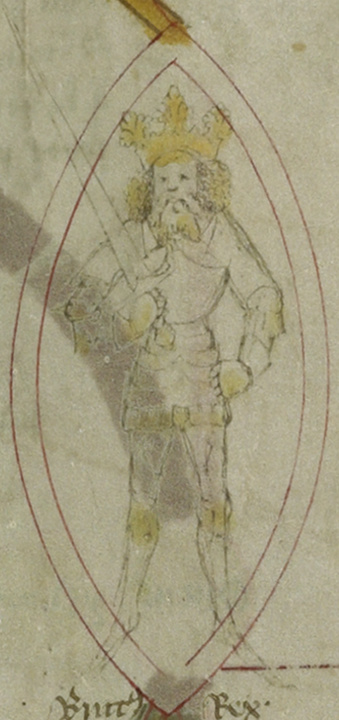
Brutus of Troy, also called Brute of Troy, is a mythical British king described as a descendant of the Trojan hero Aeneas and as the eponymous founder and first king of Britain. The legend first appears in the 9th-century Historia Brittonum and is best known from the 12th-century account by Geoffrey of Monmouth in his Historia Regum Britanniae.
- field
- Mythical founder and king
- nationality
- Trojan / British (legendary)
- known_for
- Eponymous founder of Britain; first king of Britain
- born
- Not specified in source
- died
- Not specified in source
Lore & Background
According to the Historia Brittonum, Brutus was the grandson or great grandson of Aeneas. A magician foretold that the unborn child would be a boy, the bravest and most beloved in Italy. Enraged, Ascanius had the magician killed. The mother died in childbirth. Brutus later accidentally killed his father with an arrow and was banished from Italy. After wandering among the islands of the Tyrrhenian Sea and through Gaul, where he founded Tours, he came to Britain, named it after himself, and filled it with his descendants. His reign is synchronized to the time of the High Priest Eli in Israel and the capture of the Ark of the Covenant by the Philistines. Variant versions in the same work trace his genealogy to Ham or Japheth, sons of Noah, or to the legendary Roman king Numa Pompilius.
Reader's Guide
Geoffrey of Monmouth's Historia Regum Britanniae expanded the story, making Brutus the grandson of Ascanius and son of Silvius. In this version, Brutus kills both parents as foretold, leads enslaved Trojans in Greece, defeats King Pandrasus, marries his daughter Ignoge, and receives a vision from Diana of an island in the western ocean. After adventures in north Africa and Gaul, he lands at Totnes, defeats the giant Goemagot, renames the island Britain, founds New Troy (later London), and rules for twenty-four years. The legend was treated as genuine history into the Early Modern period, appearing in Holinshed's Chronicles and Tudor armorials. It inspired medieval chronicles such as Wace's Roman de Brut and Layamon's Brut, and the Welsh Brut y Tywysogion. The Brutus myth was not disproven archaeologically until the 20th century, when London's foundation was dated to 43 AD.
Did You Know?
- The name 'Brutus' may derive from Isidore of Seville's Etymologiae, which speculated that 'Britain' came from 'bruti' meaning brutes or savages.
- Geoffrey of Monmouth's account says Brutus founded a city on the Thames called Troia Nova, later corrupted to Trinovantum and then London.
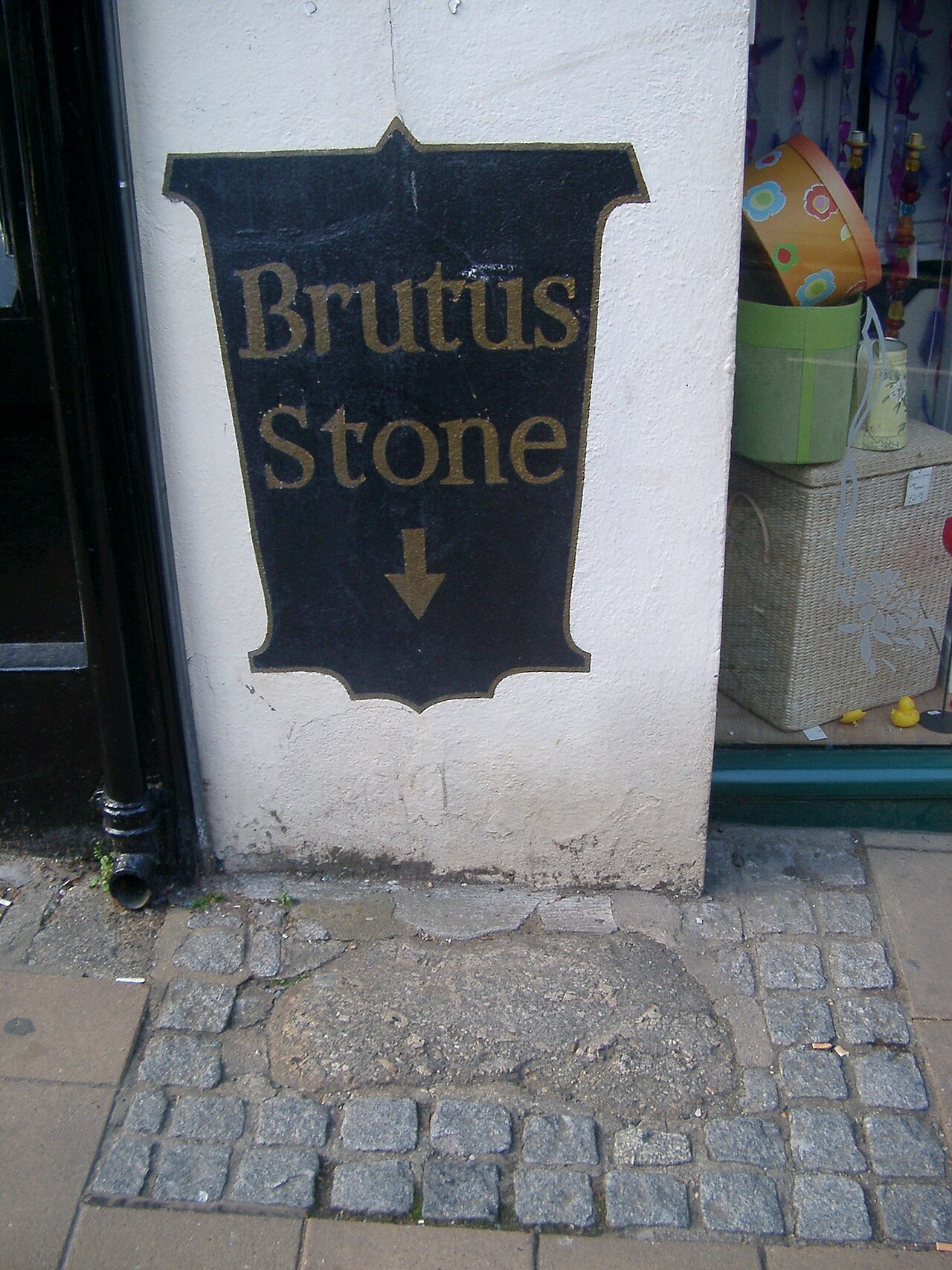
- A stone on Fore Street in Totnes, Devon, known as the 'Brutus Stone', commemorates the legendary landing.
- The 18th-century poet Hildebrand Jacob wrote an epic poem 'Brutus the Trojan, Founder of the British Empire' about him.
Genealogical Tangles and Biblical Roots
The figure of Brutus sits at the intersection of multiple competing mythological traditions. In the Historia Brittonum, his parentage shifts between versions: sometimes he is the son of Ascanius, sometimes the son of Silvius, who is himself identified either as Aeneas's second son or as Ascanius's son. One variant traces his line back to Ham, son of Noah, while another connects him through the legendary Roman king Numa Pompilius to Japheth. A separate entry even introduces a different Brutus entirely—son of Hisicion, son of Alanus the first European—whose brothers include Francus, Alamanus, and Romanus, ancestors of major European peoples. These contradictions reveal how medieval compilers wove together classical Trojan genealogies, which linked the royal family to Greek deities, with Christian pseudo-historical frameworks, particularly the so-called Frankish Table of Nations that historian Walter Goffart actually dates to sixth-century Byzantine scholarship. The result is a figure whose ancestry cannot be pinned down, reflecting the layered and often contradictory nature of early medieval historiography.
From Banishment to the Founding of an Island Kingdom
The core narrative, expanded most fully by Geoffrey of Monmouth, follows a young man driven from Italy after accidentally killing his father with an arrow. Wandering through the Tyrrhenian islands and into Gaul, Brutus stumbles upon enslaved Trojans in Greece, rallies them, and defeats the Greek king Pandrasus through a night raid on his camp. He wins Pandrasus's daughter Ignoge in marriage along with ships for the voyage. At sea, Brutus receives a prophetic vision from the goddess Diana on a deserted island, showing him a western land populated only by giants. After encounters with Sirens and a reunion with exiled Trojans led by the mighty Corineus, the group sails to Albion. They defeat the giant descendants of Alebion, and Brutus renames the island after himself. He establishes a city on the Thames called Troia Nova—later corrupted to Trinovantum and eventually London—enacts laws for his people, and rules for twenty-four years before his death. The island is then partitioned among his three sons: Locrinus receives England, Albanactus Scotland, and Kamber Wales.
The Etymological Seed and Medieval Compilation
The very name Britain may owe its connection to Brutus to a rather unflattering etymology. Isidore of Seville, in his seventh-century Etymologiae, speculated that the island's name derived from the Latin word bruti, implying its inhabitants were, in his estimation, brutes or savages. This spurious linguistic link likely seeded the later legend that a man named Brutus founded the land. The Historia Brittonum, an anonymous ninth-century compilation with commentary attributed to Nennius, is the earliest surviving text to narrate the full story. It situates Brutus's reign alongside the biblical era of the High Priest Eli and the Philistine capture of the Ark of the Covenant, deliberately anchoring a classical hero within a Christian chronological framework. The text also draws on Roman authorities like Livy and Virgil for its account of Aeneas's settlement in Italy and Ascanius's founding of Alba Longa. The blending of these sources—classical, biblical, and etymological—produces a narrative that is neither purely myth nor history but a distinctly medieval synthesis.
The Word Brut and a Literary Dynasty
Brutus's influence extends far beyond the character himself into the very vocabulary of British and Welsh historiography. Wace's twelfth-century Norman French verse adaptation of Geoffrey's Historia was titled the Roman de Brut, and Layamon's Middle English rendering was simply called the Brut. The word itself came to signify a chronicle of British history, a semantic legacy that persisted for centuries. In the Welsh literary tradition, one of several Middle Welsh adaptations of Geoffrey's work was named Brut y Brenhinedd, meaning Chronicle of the Kings. Even Brut y Tywysogion, a major historical chronicle covering Welsh rulers from the seventh century through the loss of independence—a work containing no legendary material whatsoever—bears the title brut, testifying to how deeply Geoffrey's framework had permeated the cultural imagination. The name of a mythical Trojan prince thus became the standard term for recording the actual history of a nation, a remarkable inversion of fact and fiction.
Gallery
Frequently Asked Questions
Who is Brutus of Troy?
Brutus of Troy, sometimes called Brute of Troy, is a legendary figure in British folklore described as a Trojan descendant of the hero Aeneas. He is regarded as the eponymous founder and first king of Britain.
What is Brutus of Troy's role in British legend?
He serves as the mythical founding king who gives Britain its name and establishes the lineage of British rulers. His story connects the island's origins to the fall of Troy, linking British identity to classical mythology.
Where does the Brutus of Troy legend first appear?
The tale first surfaces in the 9th-century Historia Brittonum, though it reached its most famous telling in Geoffrey of Monmouth's 12th-century Historia Regum Britanniae. Geoffrey's version became the dominant retelling that shaped later British folklore.
Why is Brutus of Troy important to British folklore?
He provides a mythological origin story that ties Britain to the Trojan War, giving the island a noble classical pedigree. As the eponymous founder, he anchors the entire legendary royal succession that Geoffrey of Monmouth and later writers built upon.
How does Brutus of Troy's story end?
The core founding legend does not specify a particular death or dramatic conclusion for Brutus. His narrative functions primarily as an origin point, with later kings and events building upon his establishment of the British line.
More in British folklore 1-24
Spotted an error? Know more?
This is a living reference — every entry is fact-audited, and reader corrections feed straight into our audit queue. Suggest an edit · See this site's audit record